Textiles: Lyon Silk & Jacquard Looms
At the confluence of the Rhône and Saône rivers sits Lyon, the undisputed historical silk capital of the Western world. Through royal trade monopolies and early algorithmic loom engineering, Lyon's canuts (silk weavers) cloaked European royalty in brocades and damasks of staggering complexity.
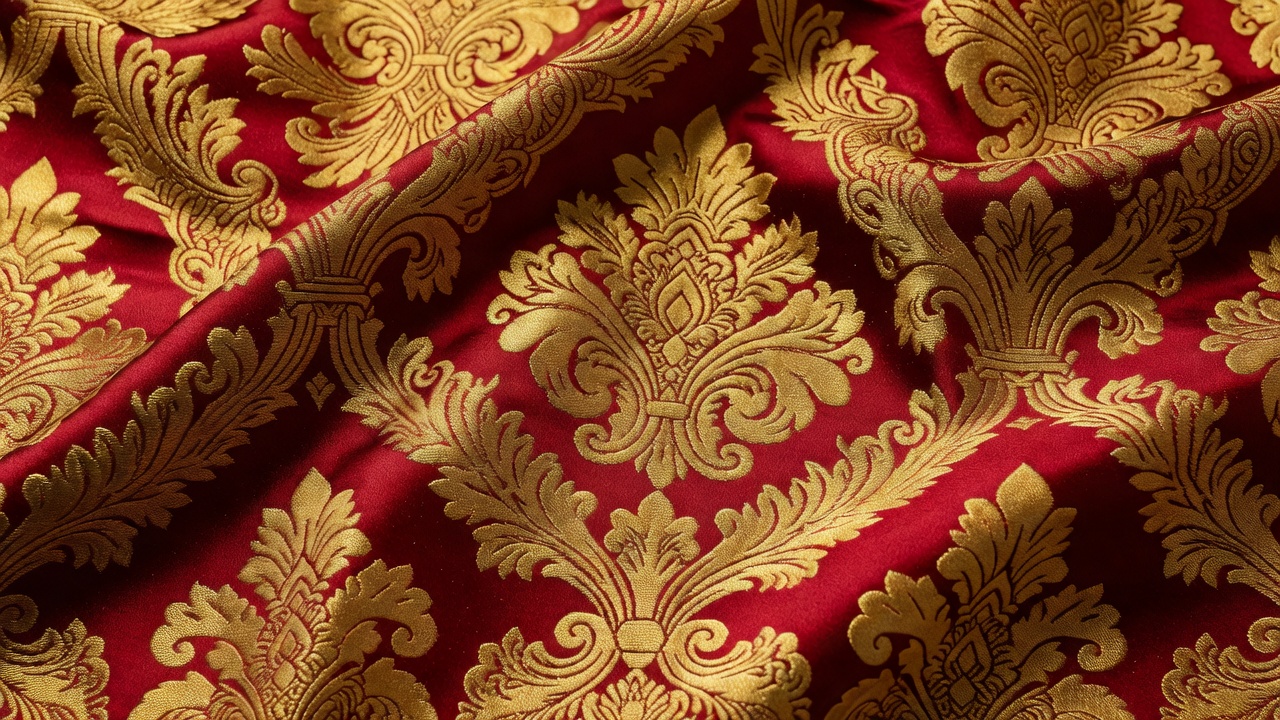
The Royal Charter and Water Chemistry
In 1466, King Louis XI attempted to plant a state silk industry in Lyon, but local merchants resisted. It was not until 1536, when King François I granted two Piedmontese master weavers, Étienne Turquet and Barthélemy Naris, letters patent to manufacture silk free of municipal taxes, that the Lyon Grande Fabrique was born. François decreed that all raw silk imported into France must pass through the Lyon customs house first.
Beyond royal decree, the natural hydrology of Lyon provided an invaluable technical advantage. The river Saône is exceptionally soft and chemically poor in calcium and magnesium. When raw silk skeins were boiled off to strip the gummy natural sericin protein, the waters of the Saône yielded a lustrous, silky sheen impossible to achieve with the mineral-heavy chalk rivers of northern France or England.
Lyon Silk Guild Ledger Metrics
- Charter Year1536 (King François I)
- Urban Center of ProductionLa Croix-Rousse (The Hill that Works)
- Architectural InnovationTraboules (Internal covered pedestrian corridors)
- Transformative TechnologyJacquard Programmable Punch-Card Loom (1804)
- Present Day SpecializationHaute Couture Damask, Aerospace Carbon Weaving
La Croix-Rousse: An Urban Machine for Silk
In the early 19th century, the silk trade moved up the steep slopes of the Croix-Rousse hill. The district was developed specifically around the spatial requirements of newly invented mechanical looms. Tenement buildings were constructed with extraordinary four-meter ceiling heights to accommodate the tall wooden frames of Jacquard mechanisms.
Massive mullioned windows illuminated the delicate silk warp threads, while floors were fortified with heavy oak beams to resist the vibrations of hundreds of rhythmic shuttles. Between these buildings, the famous traboules—covered stairwells and passageways running directly through residential buildings—allowed weavers to transport bolts of delicate raw silk down to the river merchants without exposing them to rain.
The Jacquard Mechanism (1804)
Joseph-Marie Jacquard replaced draw-boys with a chain of punched paper cards that mechanized complex floral patterns, establishing the direct conceptual ancestor of binary computer programming.
The Canut Revolts
The Lyon silk workers (canuts) launched historic labor rebellions in 1831 and 1834 demanding a guaranteed minimum price per meter, creating one of the earliest modern labor movements.
Modern Renaissance: From Versailles to Aerospace
Today, Lyon's historic silk manufactories—such as Tassinari & Chatel and Prelle—maintain irreplaceable archives containing tens of thousands of original Jacquard punch cards. These master weavers are commissioned by world museums to painstakingly recreate the historic silk wall coverings for the Palace of Versailles, Fontainebleau, and royal residences across Europe.
Simultaneously, the region's unmatched mastery of complex multi-axial thread tension has evolved into high-tech composite engineering. Lyon-based textile firms now weave specialized carbon-fiber and silica fabrics used in modern aerospace heat shields, satellite radomes, and surgical vascular grafts.