Watches: Jura Valley Calibers
Perched 1,000 meters above sea level in the high limestone valleys of the Swiss Jura, a string of twin towns—La Chaux-de-Fonds and Le Locle—along with the remote Vallée de Joux, developed an unparalleled global monopoly in mechanical micro-engineering and haute horlogerie.
The Protestant Reformation and the Calvinist Pivot
The genesis of Swiss horological dominance traces directly to 1541, when John Calvin introduced strict sumptuary laws in Geneva prohibiting the wearing of jewelry, crucifixes, and decorative gold trinkets. Facing economic ruin, the city's exceptionally skilled goldsmiths, jewelers, and enamellers joined forces with refugee Huguenot clockmakers fleeing religious persecution in France.
Because a timepiece was deemed a practical instrument of utility rather than ostentatious adornment, the artisans redirected their decorative mastery inside the pocket watch case. As Geneva became congested, craftspeople moved northward into the rugged Jura Mountains, where long, snowbound winters trapped farmers indoors for six months each year, creating an abundant, patient workforce eager for micro-mechanical piecework.
Jura Horological Ecosystem Ledger
- Urban UNESCO StatusLa Chaux-de-Fonds / Le Locle Watchmaking Town Planning
- Dominant Industrial ModelL'Établissage (Dispersed Domestic Specialization)
- Specialized High ValleysVallée de Joux, Val-de-Travers, Saint-Imier
- Core InnovationsLever Escapement Refinements, Tourbillons, Chronographs
- Legal BenchmarksSwiss Made Ordinance (SR 232.119) & Poinçon de Genève
Urban Architecture Designed for Natural Light
Unlike standard medieval European towns built around dense castle fortifications, La Chaux-de-Fonds was intentionally rebuilt following an 1850 fire as a specialized factory-town. The streets were laid out in a rigorous parallel grid oriented along solar exposure lines.
Residential homes were designed with continuous rows of top-floor north-facing windows (ateliers sous les toits) that eliminated harsh glare while maximizing the consistent, diffuse daylight essential for filing gear teeth smaller than half a millimeter and manipulating delicate hairspring balance wheels without optical distortion.
The Master Assembler (Établisseur)
The central watch company did not cast its own parts; it procured pinions, screws, rubies, and springs from isolated farmhouse specialists, assembling and regulating the final movement under its brand name.
The Complication Specialists
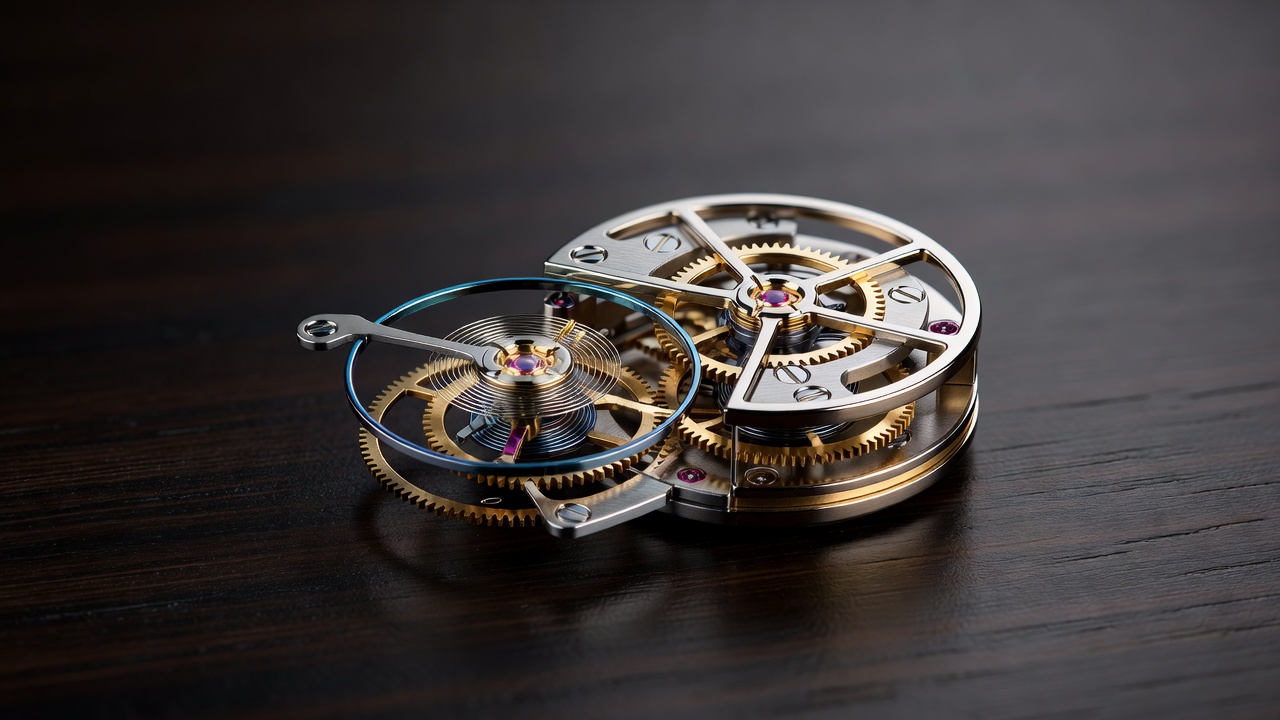
The remote Vallée de Joux emerged as the world's epicenter for extreme mechanical complications: minute repeaters, perpetual calendars, split-second chronographs, and perpetual resonance tourbillons.
The Modern Swiss Made Ordinance
To defend against global industrial quartz and modular counterfeit assemblies, the Swiss Federal Council continually tightens the Swiss Made ordinance. Under current rules, at least 60% of the manufacturing costs of the watch as a whole must be generated in Switzerland.
Furthermore, the movement must be of Swiss construction, encased in Switzerland, and undergo final technical inspection by the manufacturer within Swiss borders. In Geneva, the legendary Poinçon de Genève (Geneva Seal) enforces even stricter decorative hand-finishing requirements, requiring hand-polished bevels (anglage) on every steel spring and ruby sink.