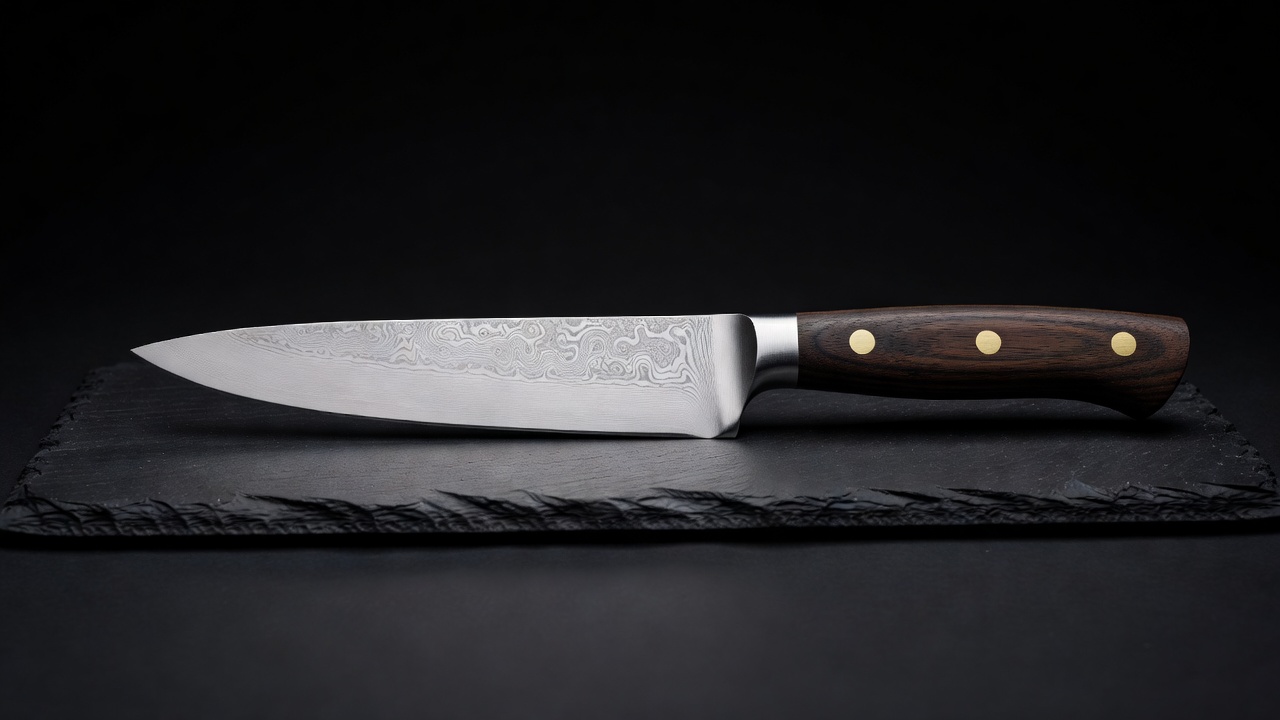
Cutlery: Solingen Steel Edge
For over seven centuries, the name Solingen stamped into the ricasso of a blade has represented the gold standard of metallurgy, edge retention, and balance. Known throughout Europe as the "City of Blades" (Klingenstadt), this modest municipality in North Rhine-Westphalia transformed raw mineral deposits into a world-dominating trade monopoly.
The Geological Triad: Water, Stone, and Ore
The rise of Solingen was not planned by imperial decrees; it was dictated by the topography of the Bergisches Land. The Wupper river cut a steep, winding gorge through dense forests, providing a relentless, high-velocity head of water. Beginning in the late 13th century, local blacksmiths erected Kotten—water-powered grind mills along the riverbanks.
The river turned massive waterwheels that operated two vital mechanisms: heavy mechanical drop hammers for forging bar steel, and massive quarried sandstone wheels measuring up to two meters across. The river mud contained fine silica sand, which the Schleifer (grinders) used as a cooling, lubricated slurry to prevent thin blades from overheating and losing their temper during fine edge profiling.
Anatomy of a Solingen Production Dossier
- Charter Year of Blacksmith Guild1363 (Count Wilhelm II von Berg)
- River Hydropower SourceRiver Wupper & Tributary Streams
- Core Historical OutputsBroadswords, Rapiers, Surgical Scalpels, Shears
- Signature Grinding TechniqueSolinger Dünnschliff (Ultra-thin tapered profile)
- Statutory Protection StatusSolingenverordnung (Federal Law since 1938/1994)
The Guild Cartel: Schmiede, Härter, Schleifer, and Reider
By the 16th century, Solingen sword smiths were organized into four tightly insulated corporate fraternities. No single artisan produced an entire knife or sword from beginning to end. Instead, a strict division of labor prevented any single individual from stealing trade secrets or establishing rogue operations outside the valley:
The Schmiede (Forgers) & Härter (Temperers)
Forgers hammered pig iron and crucible steel bars into rough blade blanks using water-driven tilt hammers. Temperers guarded proprietary water-quenching baths, judging oil and brine temperatures purely by the glowing color of red-hot carbon steel in darkened rooms.
The Schleifer (Grinders) & Reider (Assemblers)
Grinders lay prone on wooden benches suspended over massive sandstone wheels, hollow-grinding edges by tactile muscle memory. Assemblers (Reider) joined handles of stag horn, walnut, or nickel silver, followed by final honing on leather strops.
The Solingenverordnung: Legal Sanctuary for an Industrial Brand
By the early 20th century, foreign producers in Sheffield, Thiers, and later East Asia flooded markets with stamped blades falsely marked "Solingen." In response, the German Reichstag in 1938 passed the Solingen Law, renewed and strengthened in 1994 by the Federal Republic of Germany as the Solingenverordnung.
Unlike ordinary protected geographical indications (PGIs), Solingen is one of only two cities worldwide whose name is protected by a specific national legislative act. To carry the "Solingen" name, all fundamental stages of production—forging, heat treating, hardening, grinding, and finishing—must be executed within the recognized Solingen municipal industrial zone. The raw steel must satisfy specific chemical purity criteria, ensuring that modern stainless cutlery maintains the Rockwell hardness standards pioneered by medieval sword-cutters.